























































































































































































































Top 10 Richest CEOs in the United States 2025

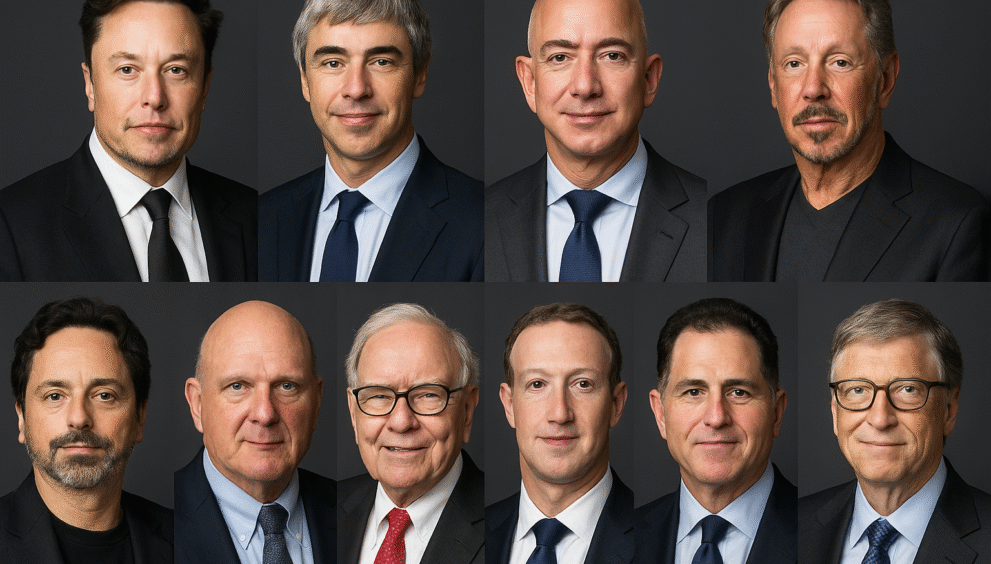
The United States has long been the home of world-class entrepreneurs and business leaders whose visions have transformed industries and lifestyles. By 2025, the landscape of wealth has shifted dramatically, with technology and finance at the center of nearly every major fortune. Among these leaders, CEOs stand out—not only for their corporate leadership but also for their enormous personal net worth.
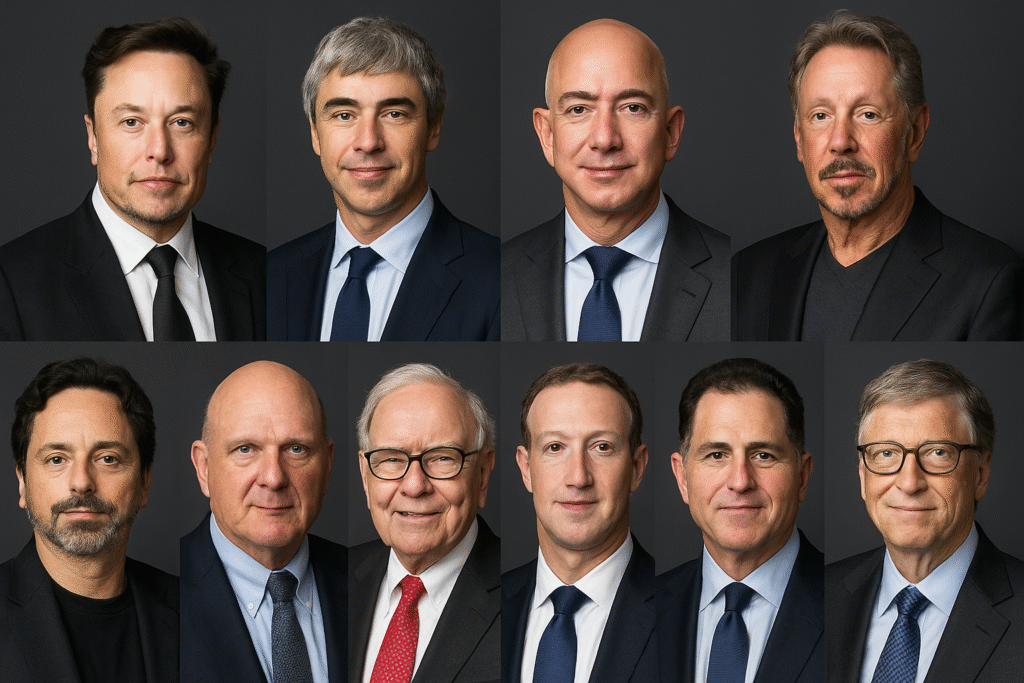
When we look at the Top 10 Richest CEOs in the United States 2025, we are not just looking at numbers on a billionaire tracker. We are examining the people who steer global companies, influence stock markets, and shape innovations that reach billions of people. This article provides a complete guide to the ten wealthiest American CEOs in 2025, with details on their companies, fortune sources, and influence.
1. Elon Musk – Tesla, SpaceX, X, xAI, Neuralink
No list of billionaire CEOs in 2025 starts anywhere but with Elon Musk. With a net worth estimated between $378 billion and $407 billion, Musk is comfortably the richest CEO in the United States. His wealth fluctuates dramatically with Tesla’s market cap, which is directly tied to electric vehicle adoption and renewable energy investments. Beyond Tesla, Musk controls or influences several high-impact companies, including SpaceX (valued near $400 billion), X (formerly Twitter), xAI, and Neuralink.
What makes Musk particularly unique is the diversification of his ventures: from brain-computer interfaces to tunneling projects, he’s building ecosystems across industries. His leadership style—bold, risky, and innovative—has cemented him as not just the richest CEO, but arguably the most influential entrepreneur alive.
2. Larry Ellison – Oracle
The Oracle co-founder and chairman, Larry Ellison, has staged a stunning comeback in recent years. In 2025, his wealth hit around $243 billion, thanks to Oracle’s resurgence in cloud computing and AI-driven enterprise software. A massive $26 billion surge in his net worth earlier in the year pushed him past Jeff Bezos and Mark Zuckerberg, securing his place as the second-richest U.S. CEO.
Ellison has always been known for his aggressive leadership and investments, from sailing to luxury real estate in Hawaii. But his focus on making Oracle relevant in the AI era has proven that even established companies can reinvent themselves under visionary leadership.
3. Mark Zuckerberg – Meta
Mark Zuckerberg, CEO of Meta Platforms, has also benefited from the global AI and digital transformation boom. His net worth sits near $260 billion, putting him firmly in the billionaire elite. Meta’s pivot from social networking to metaverse technologies, AI integration, and digital advertising dominance has revitalized its long-term growth story.
Zuckerberg remains one of the youngest billionaires in this top-10 list, and his vision continues to evolve. While the metaverse is still developing, his strategic bets on AI and immersive technology have positioned Meta as a permanent player in the future of the internet.
4. Jeff Bezos – Amazon
Although Jeff Bezos stepped down as Amazon’s CEO in 2021, he remains its Executive Chairman, and for the sake of this list, his influence as the company’s face cannot be ignored. In 2025, his net worth is estimated at $220+ billion. Amazon’s dominance in e-commerce, logistics, and cloud computing (AWS) keeps him among the richest in the world.
Bezos has also expanded his wealth footprint with Blue Origin, his space exploration company, as well as investments in media (The Washington Post) and real estate. Despite being overtaken by Ellison and Zuckerberg in 2025 rankings, Bezos remains a defining symbol of American entrepreneurship.
5. Larry Page – Alphabet (Google)
Larry Page, Google’s co-founder and former CEO of Alphabet, still holds significant shares in the company. With an estimated fortune near $189 billion, Page continues to rank among the richest American business leaders.
His investments in cutting-edge technologies, AI projects, and experimental ventures such as flying cars (Kitty Hawk and others) reflect his commitment to innovation beyond search engines. Though he no longer runs Alphabet day-to-day, his legacy and wealth continue to grow with the company’s dominance.
6. Sergey Brin – Alphabet (Google)
Sergey Brin, the other co-founder of Google, parallels Larry Page with a net worth of around $177 billion. Known for his work in Alphabet’s research and development, Brin remains highly influential in advancing AI, search, and autonomous systems.
Brin’s leadership style is more understated compared to Musk or Ellison, but his long-term equity in Google ensures his continued presence in America’s billionaire elite.
7. Steve Ballmer – Microsoft, LA Clippers
Former Microsoft CEO Steve Ballmer remains a billionaire powerhouse with an estimated fortune of $174 billion. While he no longer runs Microsoft, his continued shareholding in the tech giant ensures his wealth grows alongside its AI-driven success.
Outside of tech, Ballmer is best known as the owner of the Los Angeles Clippers basketball team. His passion for sports and philanthropy has made him one of the most visible billionaire personalities, with a more energetic and approachable image than many peers.
8. Warren Buffett – Berkshire Hathaway
Known as the “Oracle of Omaha,” Warren Buffett continues to lead Berkshire Hathaway, even at 94 years old in 2025. With a net worth of $151 billion, Buffett demonstrates that value investing and strategic patience remain powerful wealth-building tools.
Unlike many others on this list, Buffett’s fortune comes less from tech and more from diversified holdings in insurance, energy, railroads, and consumer goods. His reputation for honesty and philanthropy also makes him one of the most admired billionaires in the world.
9. Michael Dell – Dell Technologies
Michael Dell, founder and CEO of Dell Technologies, holds a personal fortune of about $135 billion. His leadership transformed Dell from a PC manufacturer into a global IT solutions powerhouse, focusing on enterprise services, cloud infrastructure, and data management.
Dell’s journey is often cited as a classic example of founder resilience. He took the company private in 2013, restructured it, and later brought it back to public markets, proving his long-term vision was stronger than market doubts.
10. Bill Gates – Microsoft
Although Bill Gates stepped away from daily operations at Microsoft years ago, he remains a central figure in global business and philanthropy. With a net worth of $122 billion, Gates is still among America’s wealthiest CEOs.
What differentiates Gates is his global influence through the Bill & Melinda Gates Foundation, which continues to drive major initiatives in healthcare, education, and poverty reduction. His legacy as a tech pioneer and philanthropist ensures he remains one of the most respected billionaires.
Conclusion
The Top 10 Richest CEOs in the United States 2025 represent more than just staggering numbers—they symbolize ambition, innovation, and resilience. From Elon Musk’s daring multi-industry ventures to Larry Ellison’s Oracle comeback and Warren Buffett’s timeless investing wisdom, these leaders show different paths to extraordinary success.
For readers, this list is not just trivia but a mirror of global business trends: AI, cloud computing, digital advertising, and long-term investing. The United States continues to dominate the billionaire CEO landscape, setting benchmarks for entrepreneurship and corporate growth.
Frequently Asked Questions (FAQs)
Here are some of the most commonly searched questions related to this topic, with concise answers:
Q1. What qualifies someone as a CEO in this richest-CEO ranking?
Answer. This ranking reflects individuals currently serving as CEOs of companies and whose estimated personal net worth places them among the wealthiest in the U.S., based on data from sources like Forbes, Bloomberg, and real-time billionaire rankings.
Q2. How often do these rankings change?
Answer. These rankings fluctuate frequently due to stock market shifts, company performance, and asset valuations. However, for 2025, the list reflects mid-year estimates that capture major shifts like Ellison surpassing Bezos The Times of IndiaInvestopedia.
Q3. Why are tech CEOs so dominant on this list?
Answer. Tech companies tend to have massive market caps. Founders often retain significant equity, amplifying their net worth as valuations climb—especially in sectors like AI, cloud, and electric vehicles.
Q4. How does executive compensation compare to founder equity?
Answer. While some CEOs do earn high salaries or bonuses, the real wealth often comes from equity. Annual compensation rarely leads to these massive personal fortunes, but founder equity amplifies wealth over years of growth.
Q5. What about female CEOs—are any among the richest?
Answer. As of 2025, the top-10 list includes no female CEOs. However, there is growing conversation and data on improving wealth equality and representation at the executive level.